The Sago Palm, scientific name is
Cycas Revoluta.
Often in life things are called one thing and are really another. The tomato for example is a fruit of the tomato plant but is considered a vegetable when used in cooking. The Sago Palm is not a palm at all and yet that's what someone a long time ago called it and the name stuck because of its palm-like features.
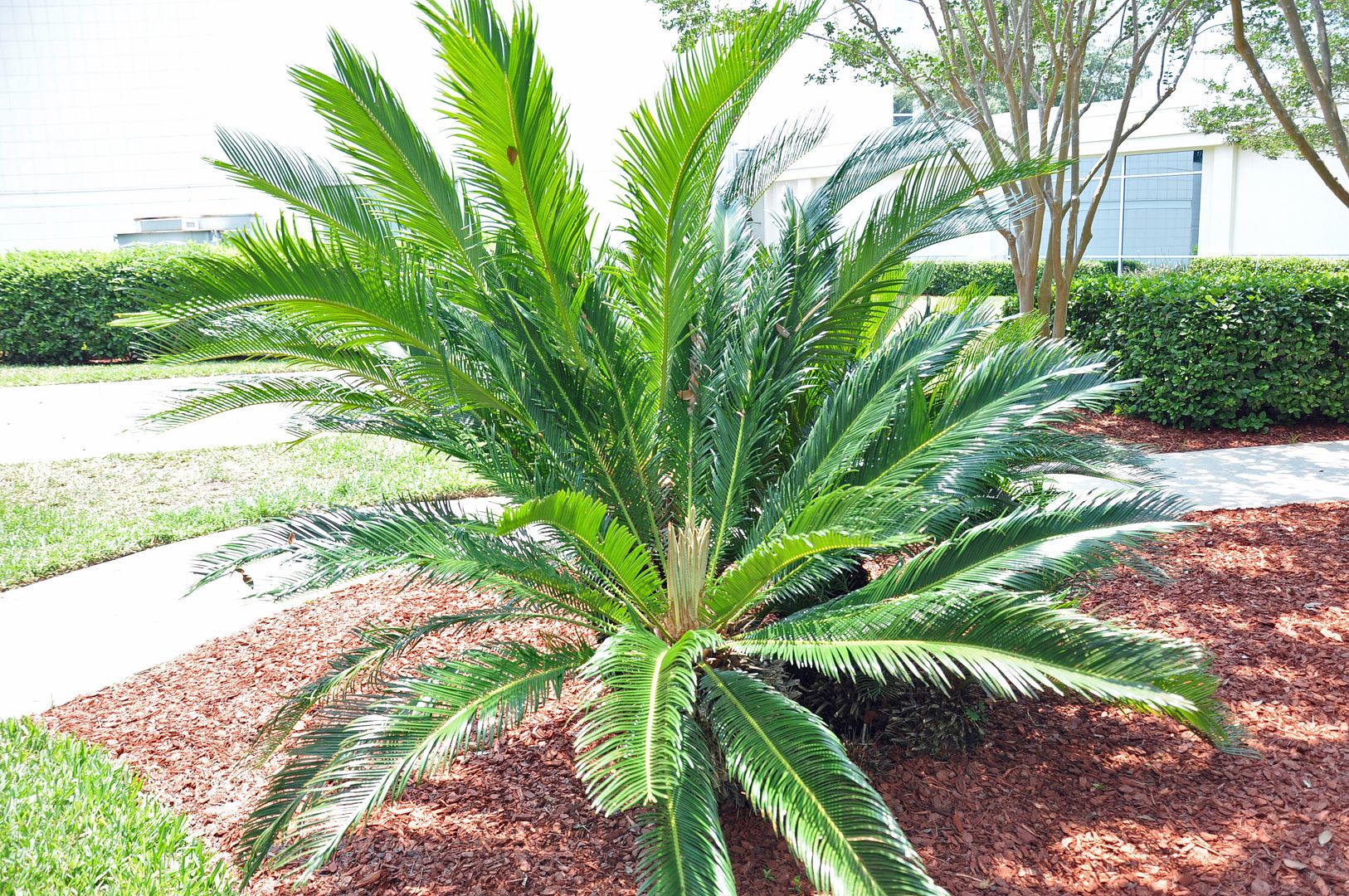
The Sago Palm has a palm like trunk and palm-like fronds but it's actually a Cycad.
They appeared on the earth during the Paleozoic Era from 350 to 250 million years ago, before the flowering plants appeared. They were dominant plants in the Mesozoic Era and coexisted with dinosaurs. For this reason these plants are sometimes referred to as “living fossils”, and the Mesozoic Era is referred to as the “Age of Cycads”. quote from SagoPalmTree.net
Now that we've got that out of the way...these are some very cool plants!
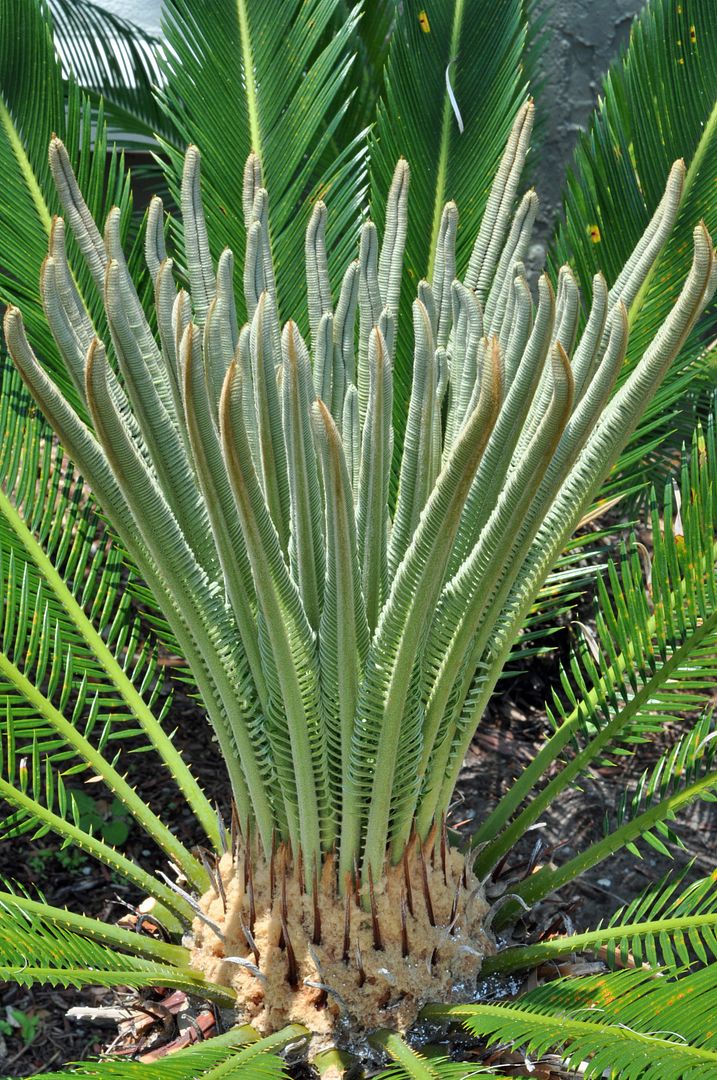
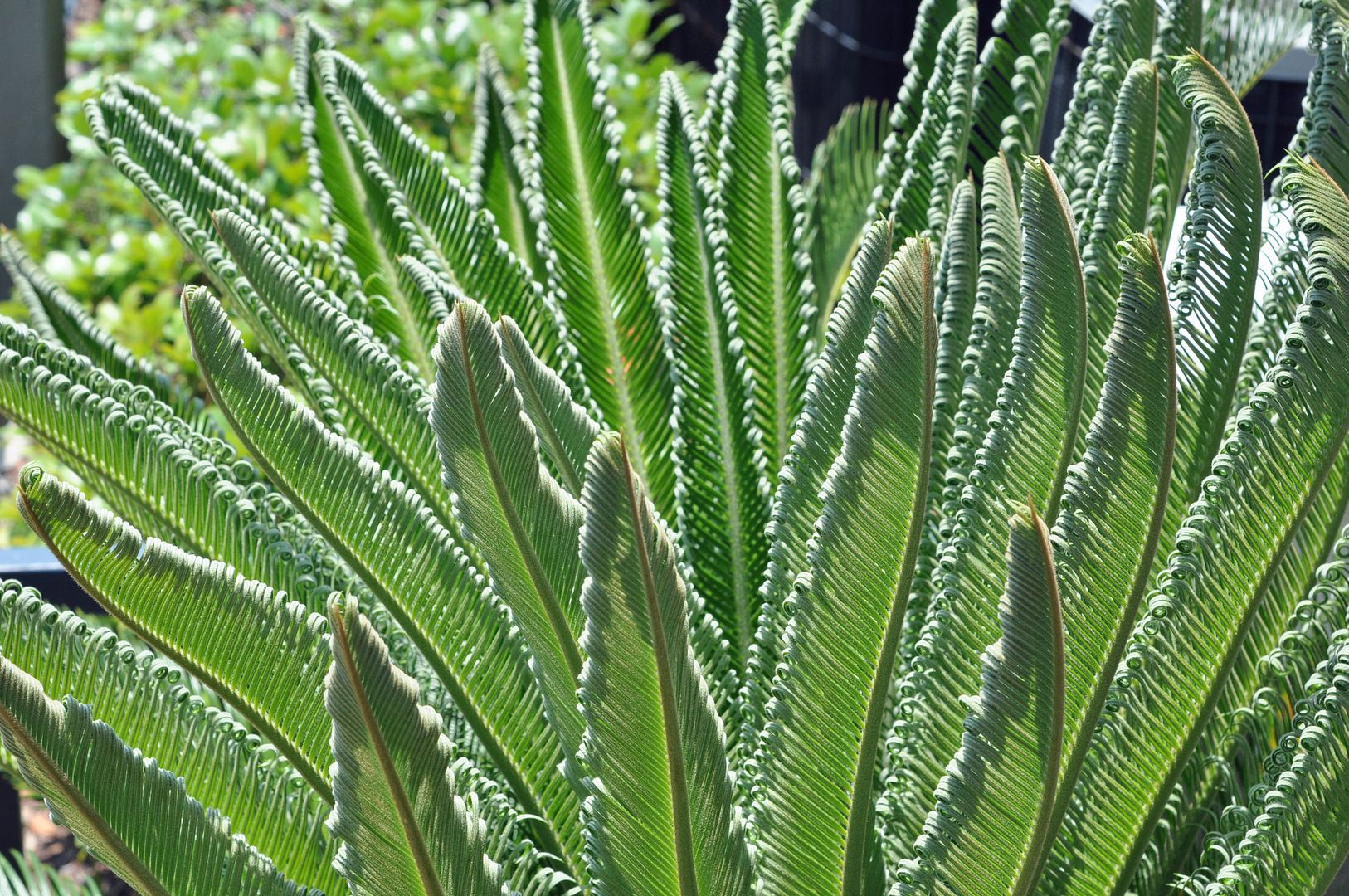
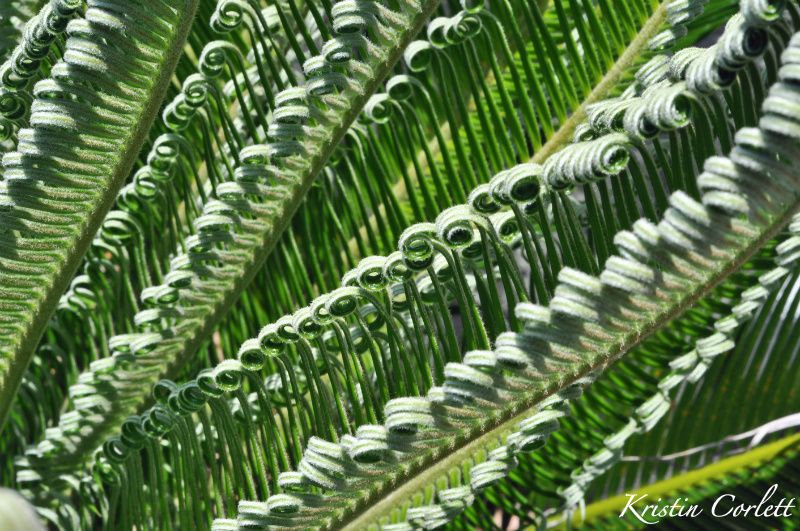
New fronds are very soft and pliable and each individual leaflet on the frond is tightly curled up. A close-up of the leaflet curls was the photo of the day last week
(POTD - Sago Palm).
Here are some of those fronds slowly opening up.
The last part of the scientific name
revoluta "...was given to this species because of the revolute (to curl back) nature of the leaflets; the edges roll under the leaflet."
source
That's the part that got me hook, line and sinker into this whole investigation of the plant - those little curls. I guess it was even a hook to the horticulturalists that named it.
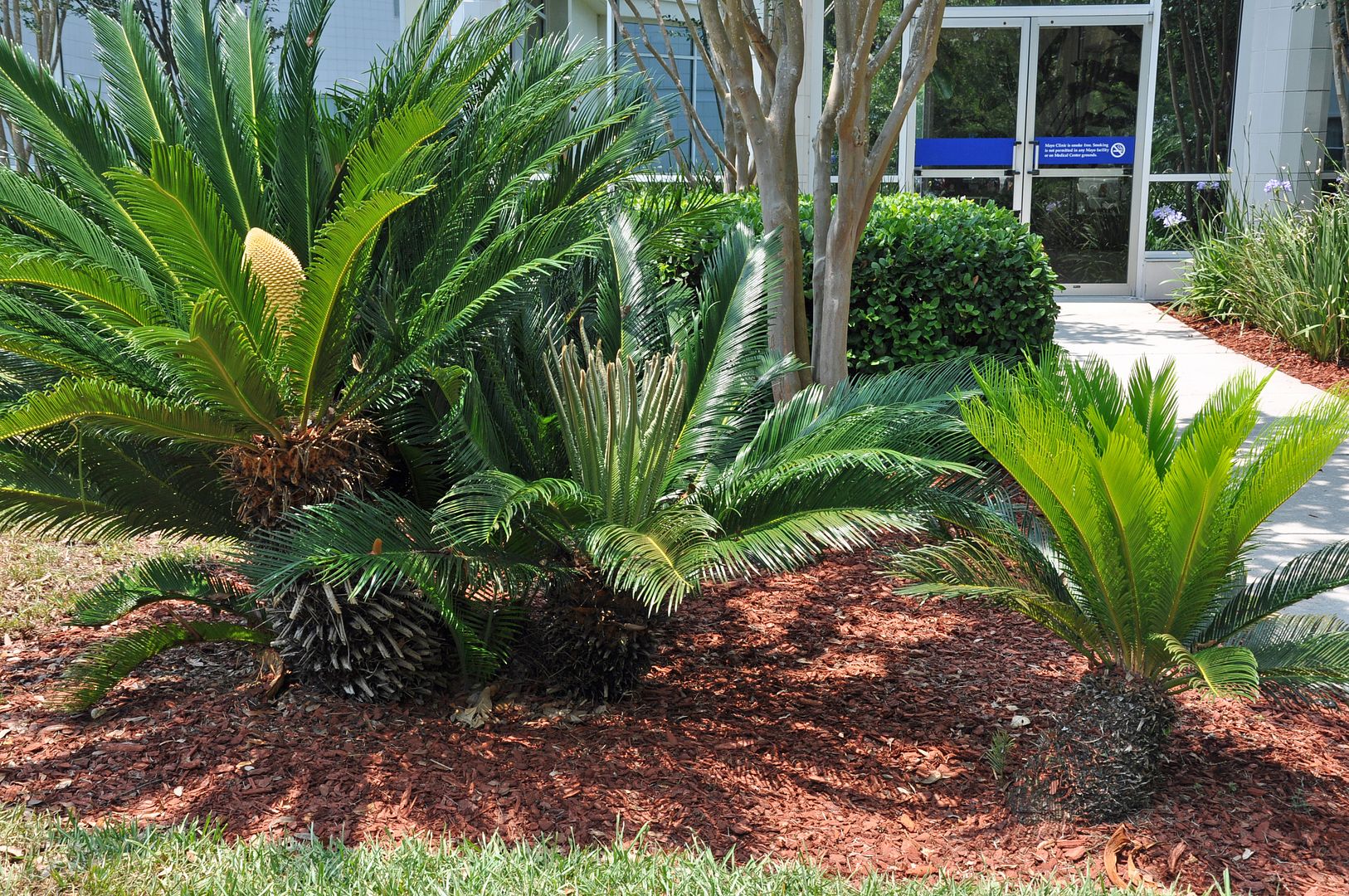
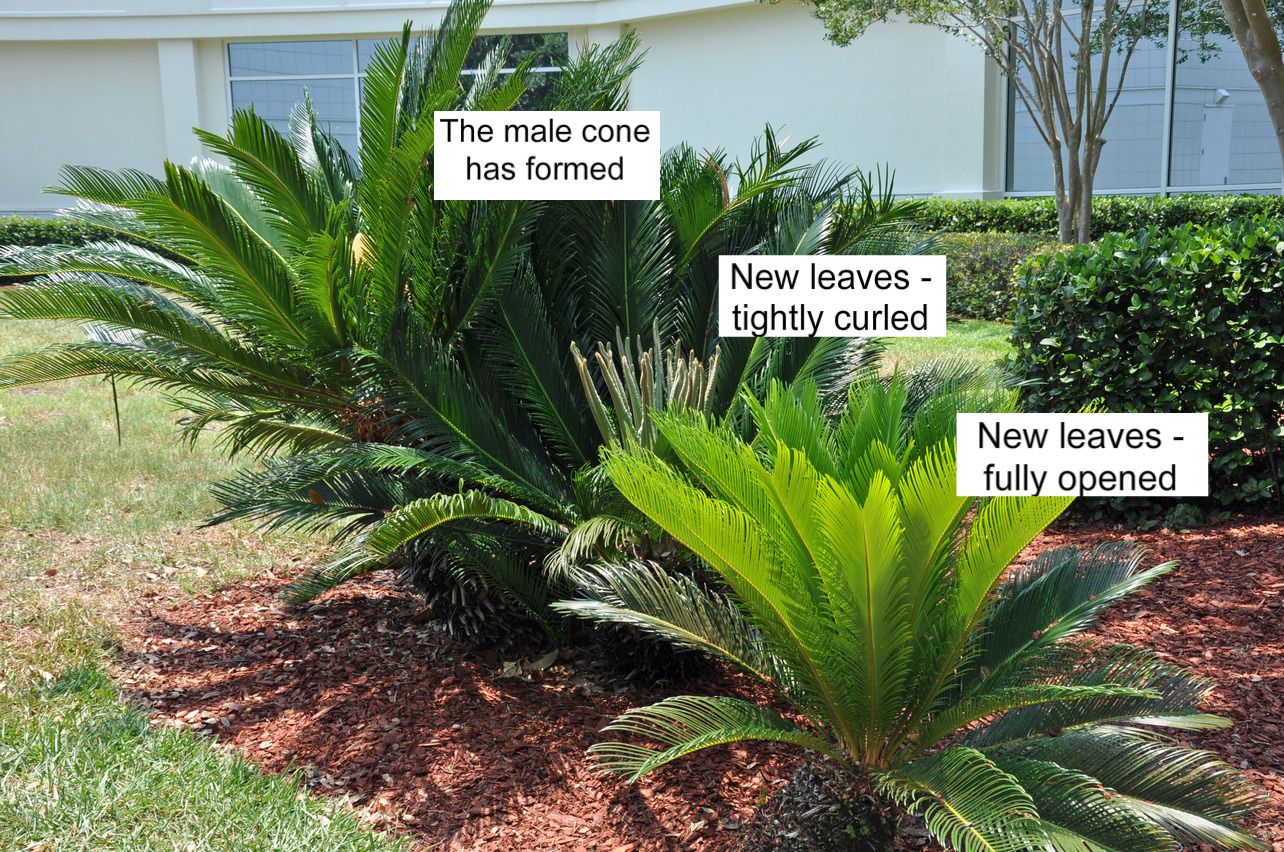
At the Mayo Clinic there were three Sago Palms in a row all in different stages of development. A male cone has formed after the new set of leaves has already opened. The middle one is in the beginning stages of a new set of leaves and the closest one on the right has fully opened, brand new leaves that are still spring green and soft as can be.
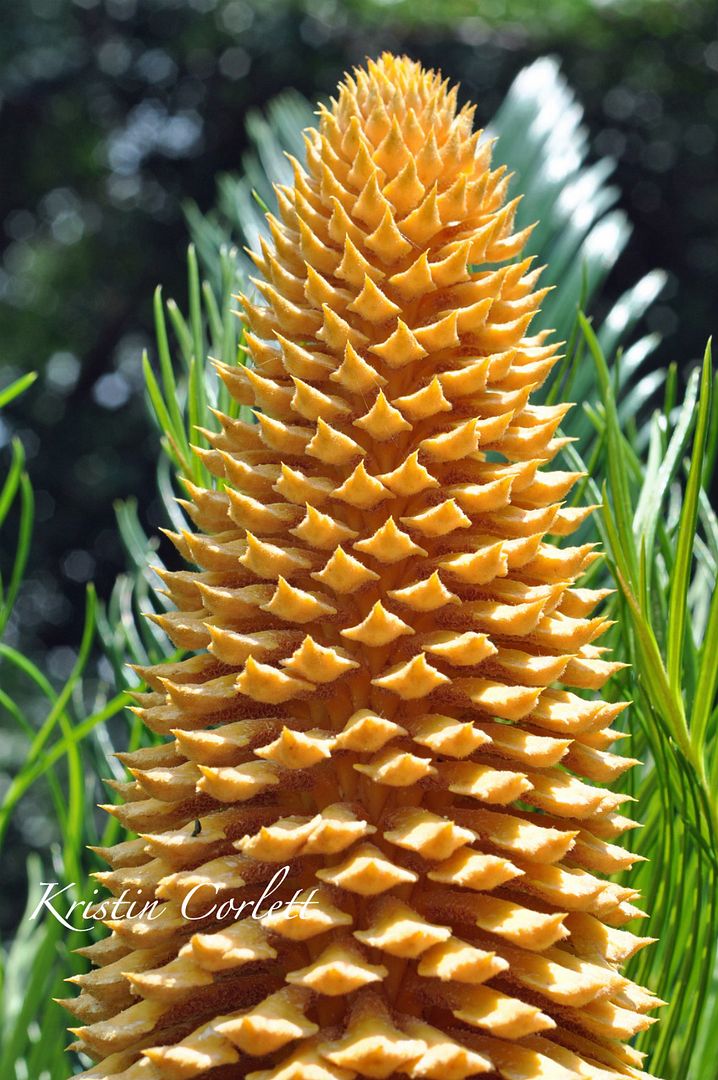
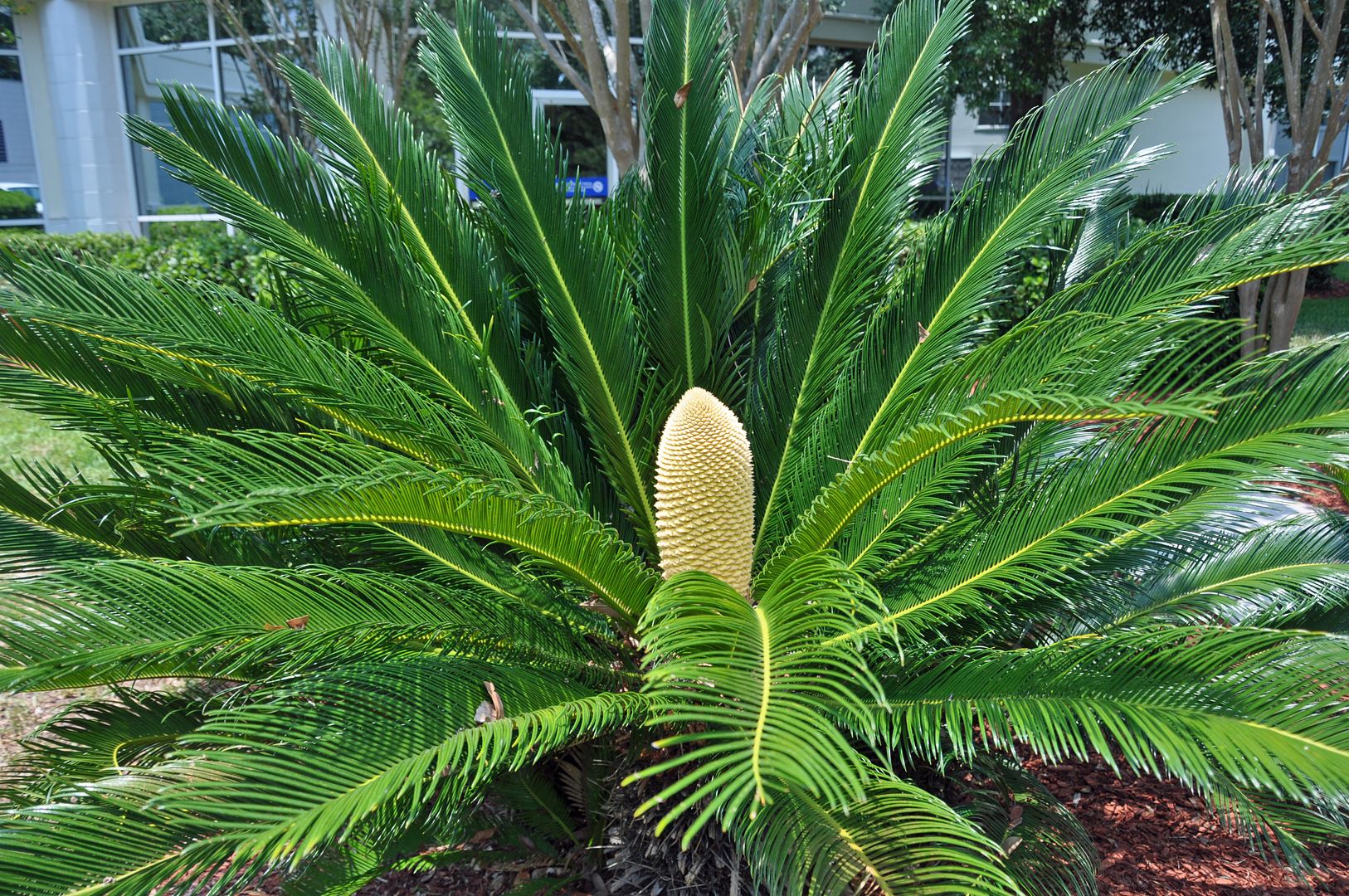
Here is the male cone that has come up from the center of the Sago Palm. These plants need to be about 15 - 20 years old before they bloom and I am guessing that the male cone, seen here, is considered the bloom.
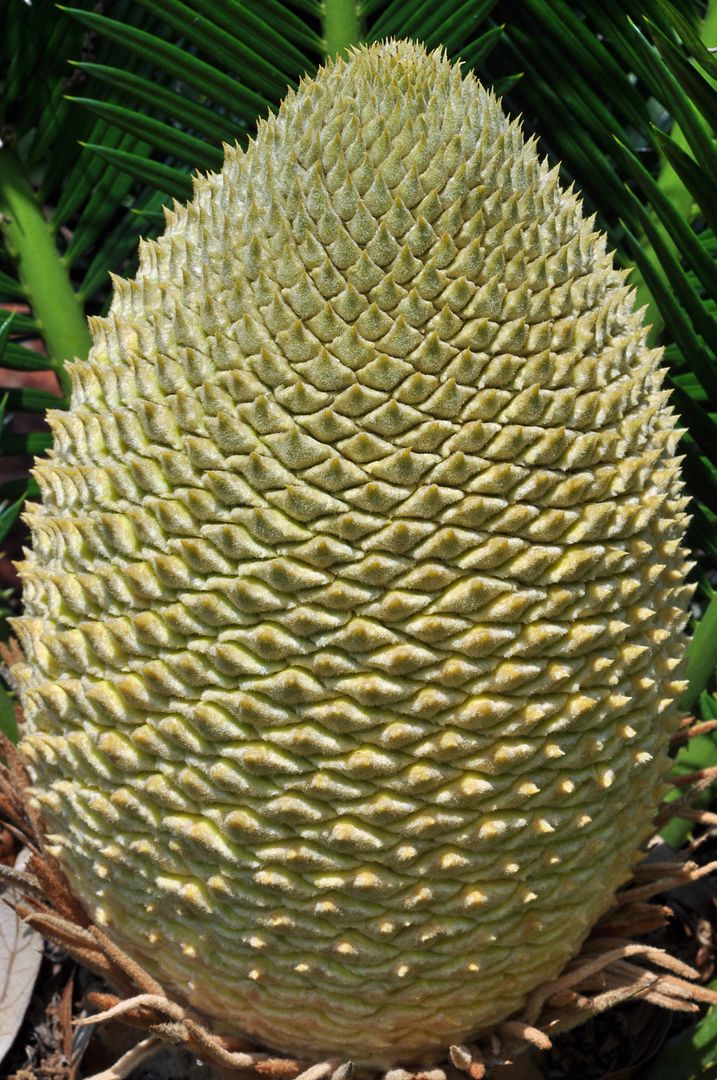
It looks like a giant brand new pine cone. Guess that's why they are a relative to the pine tree. The little nubs open up as it matures and pretty soon will release pollen. (This is a different cone from the one above - I was able to get closer to this one.)
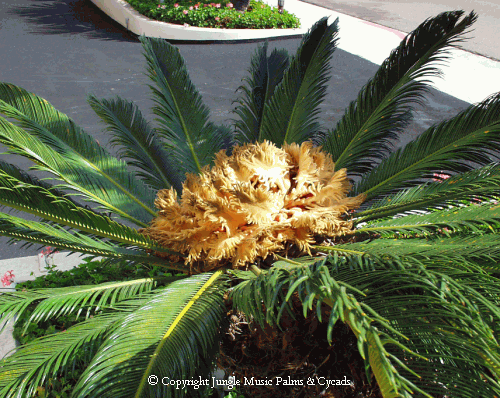
The female Sago Palm has a totally different look to it when it blooms. It's like a frilly cabbage with red seeds hidden inside. In order for Sago Palms to propagate they need to have a male and a female plant t. Insects can spread the pollen, but they are also easily pollinated with a little bit of human interaction.
Sago Palms are one of the most propagated and sold cycad in the world. The life span of these plants can be hundreds to thousands of years. Can you imagine having a thousand year old plant in your yard? Goodness, I had no idea. The Sago Palm that we had at our previous home was a female. At the time I had no idea that there was any other way for that plant to grow.
I hope you enjoyed the information about the Sago Palm. I gleaned most of my information from these three sites.
Rhapis Gardens,
Jungle Music Palms and Cycads and
SagoPalmTree.net. All of the photos are from my collection with the exception of the last photo with its credit below.
Hope you have a great day!
Kristin